
Table of Contents
What Is 10% Carbamide Peroxide and How Does It Work?
10 carbamide peroxide is one of the most commonly used ingredients in at-home teeth whitening products, and understanding how it works can help you decide how long to leave it on safely for the best results. In simple words, carbamide peroxide is a compound that slowly breaks down into hydrogen peroxide and urea when applied to your teeth, and the hydrogen peroxide is the active part that actually removes stains from your enamel. When you use a product with 10 carbamide peroxide, it releases oxygen molecules that go deep into the tiny pores of your teeth and gently lift stains caused by coffee, tea, smoking, or aging, making your teeth appear whiter over time without being too harsh.
One important thing to understand is that 10% carbamide peroxide is considered a mild and safe strength, especially compared to higher concentrations like 16% or 22%, which means it works more slowly but is much gentler on your teeth and gums. This is why dentists often recommend it for beginners or people with sensitive teeth, as it gives steady results without causing too much discomfort. According to dental experts, lower concentrations like 10% are ideal for longer wear times, which is why many people ask “10 carbamide peroxide how long to leave on”, since the timing plays a big role in how effective and safe the whitening process will be.
10 Carbamide Peroxide – How Long to Leave On
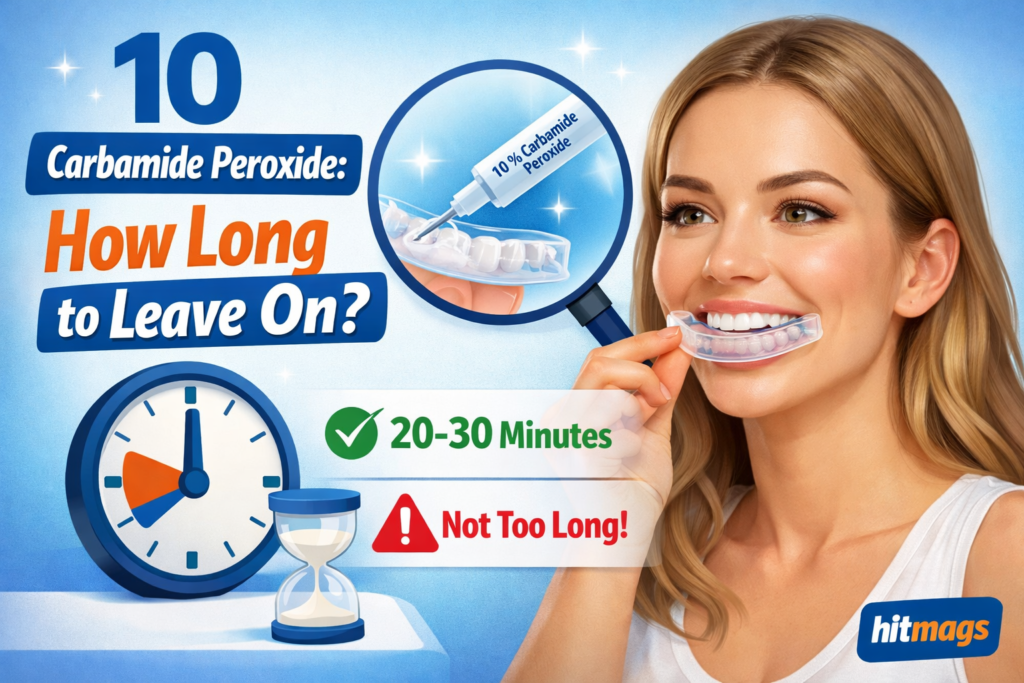
Determining how long to leave 10 carbamide peroxide on your teeth is one of the most important steps for safe and effective whitening. Most dental experts recommend wearing a 10% carbamide peroxide whitening gel for about 2 to 4 hours per session, although some products are designed to be worn overnight, which can range from 6 to 8 hours. The reason timing matters so much is that the peroxide slowly releases oxygen to break down stains, and leaving it on for too short a time may not provide noticeable results, while leaving it on too long can increase the risk of tooth sensitivity and gum irritation. It is also important to note that individual factors, such as enamel thickness, the type of stains, and personal tolerance, can affect how long you should safely wear the gel. People with sensitive teeth may find that starting with a shorter time and gradually increasing it helps reduce discomfort while still achieving whitening results.
The method of application also plays a big role in deciding the timing. Using custom whitening trays allows the gel to stay in contact with your teeth evenly, which means you can safely wear 10% carbamide peroxide for longer periods without the gel leaking onto your gums. In contrast, strips or one-size-fits-all trays may require shorter wear times to prevent irritation. Some dentists even suggest alternating days for treatment instead of daily use, especially if you notice any tingling or sensitivity, to allow your enamel and gums time to recover. A key takeaway is that consistency and proper wear time are more effective than trying to leave the gel on for excessive hours in one session. Clinical observations have shown that patients who followed recommended wear times of 2 to 4 hours consistently over one to two weeks achieved significant whitening with minimal discomfort, whereas those who exceeded the recommended duration often experienced temporary gum irritation and heightened sensitivity. This balance of duration, frequency, and product application ensures that 10 carbamide peroxide can whiten teeth safely while minimizing risks.
Can You Leave 10 Carbamide Peroxide Overnight
Many people wonder if it is safe to leave 10 carbamide peroxide on overnight, and the answer depends on both the concentration and your personal sensitivity. Because 10% carbamide peroxide is a relatively mild formula, it is generally considered safe for overnight use, especially in custom-fitted trays that prevent the gel from spilling onto the gums. Overnight application allows the peroxide to work slowly and gradually, which can be gentler on teeth compared to higher concentrations that act faster but are more likely to cause irritation. Dental professionals often recommend this approach for people who want gradual whitening without the discomfort of sensitivity or gum pain. However, even with a lower concentration, it is essential to monitor your teeth and gums during treatment. If you notice any tingling, burning, or gum inflammation, it is a clear signal to reduce wear time or pause the overnight sessions until your teeth adjust.
Overnight whitening has the added benefit of convenience, as it allows your teeth to be exposed to the whitening agent for several hours without disrupting your daily routine. Studies and clinical reports have shown that patients who used 10% carbamide peroxide overnight for one to two weeks achieved visible whitening results comparable to shorter, daytime treatments, but with fewer incidents of sensitivity. The slow and steady release of peroxide during sleep ensures that stains are broken down effectively without shocking the enamel, making it ideal for people with mild to moderate discoloration. However, it is important to remember that longer does not always mean better, and leaving the gel on significantly longer than recommended can lead to enamel dehydration and irritation. Consistent overnight use, combined with proper oral hygiene and care, provides one of the safest and most effective ways to whiten teeth using 10% carbamide peroxide while minimizing potential risks.
How Often Should You Use 10 Carbamide Peroxide
Understanding how often to use 10 carbamide peroxide is just as important as knowing how long to leave it on, because frequency directly impacts both the effectiveness of whitening and the health of your teeth and gums. For most people, dental experts recommend applying a 10% carbamide peroxide gel once daily or every other day, depending on individual sensitivity and the condition of your enamel. Daily use can speed up results, but it also increases the likelihood of tooth sensitivity, especially in people who naturally have thinner enamel or pre-existing sensitivity issues. Alternating days allows your teeth and gums to recover between treatments, reducing irritation while still providing effective whitening over time. It is also worth noting that the overall treatment period can vary; typical at-home whitening programs with 10% carbamide peroxide last between one and two weeks, but some patients may require up to three weeks for deeper stains. Consistency, combined with proper wear time, is key to achieving noticeable results without damaging your teeth.
The effects of frequency are closely linked to the concentration and duration of each session. For example, using 10% carbamide peroxide for 2 to 4 hours daily can produce similar whitening results to overnight use every other day, but with less risk of gum irritation. Dental clinics have found that patients who stick to a carefully planned routine of daily or alternate-day use see gradual improvement in color while avoiding sharp sensitivity or uneven whitening. Overusing the product or leaving it on too frequently can lead to problems such as enamel dehydration or gum discomfort, which can ultimately slow down progress if treatment has to be paused. By following a sensible schedule tailored to your oral health, you can safely maximize the benefits of 10% carbamide peroxide while minimizing any potential side effects, making it a highly effective and safe option for at-home teeth whitening.
Results Timeline and What to Expect
When using 10 carbamide peroxide, it’s natural to wonder how long it will take to see results and what kind of change you can realistically expect. Unlike stronger whitening agents that work faster but can irritate your teeth, 10% carbamide peroxide works gradually, making it ideal for people who want a gentle approach. Most users begin to notice a subtle difference in tooth color within 3 to 5 days of consistent use, with more noticeable results appearing after one to two weeks of daily or alternate-day treatment. The speed of whitening depends on several factors, including the type and severity of stains, the thickness of your enamel, and your oral hygiene habits. Stains caused by coffee, tea, red wine, or smoking may take longer to fade compared to discoloration from natural aging. A key benefit of using a lower concentration like 10% is that the gradual process minimizes sensitivity, allowing you to achieve a brighter smile without the discomfort that sometimes comes with faster-acting products.
Full results generally become visible after two weeks of consistent application, but some individuals may need up to three weeks to achieve their desired shade. It’s important to have realistic expectations and understand that whitening is a gradual process, especially with at-home treatments. Continuing proper oral hygiene, such as brushing twice a day and flossing, and avoiding heavily staining foods or drinks can help maintain the results and even enhance the whitening effect. Case studies in dental research have shown that patients who followed the recommended schedule and wear times with 10% carbamide peroxide not only achieved effective whitening but also maintained their results longer compared to those who used stronger formulas inconsistently or overused products. Understanding this timeline helps set expectations and encourages a safe, consistent approach to achieving a naturally brighter smile without compromising dental health.
10% vs Other Whitening Strengths
When deciding on a whitening treatment, it’s important to understand how 10 carbamide peroxide compares to other strengths and why it might be the best choice for safe, at-home use. Higher concentrations like 16%, 22%, or even 35% carbamide peroxide can produce faster results, sometimes in a single hour-long session, but they also carry a higher risk of tooth sensitivity, gum irritation, and uneven whitening. In contrast, 10% carbamide peroxide works more slowly, gently lifting stains over a period of days or weeks, which reduces the likelihood of discomfort and enamel damage. This makes it particularly suitable for beginners, people with naturally sensitive teeth, or anyone seeking gradual, controlled whitening without the shock that stronger formulas can sometimes cause. Additionally, because it releases peroxide slowly, it can be worn for longer periods, including overnight, which can be more convenient and less stressful than trying to fit in multiple short sessions with stronger agents.
Dental professionals often emphasize that the choice of whitening strength should balance effectiveness and comfort, rather than focusing solely on speed. Research has shown that consistent use of 10% carbamide peroxide over one to two weeks can achieve results comparable to stronger formulas applied in shorter bursts, but with significantly fewer side effects. In addition, combining 10% carbamide peroxide with good oral hygiene practices, such as brushing with fluoride toothpaste and avoiding staining foods and beverages, can enhance and prolong results. Unlike stronger concentrations that can sometimes over-whiten or create uneven shades, the gradual approach of 10% allows for a more natural, even appearance that blends with the teeth’s natural color. For most users, this makes 10 carbamide peroxide a practical, safe, and effective choice for at-home whitening that prioritizes both results and dental health.
Safety Tips for Best Results
Using 10 carbamide peroxide safely is essential to getting the best whitening results while protecting your teeth and gums. Even though 10% is a milder concentration, improper use can still cause irritation, so it is important to follow instructions carefully. Always start with clean teeth, brushing and flossing before applying the gel to ensure it makes direct contact with the enamel. Using custom-fitted trays helps distribute the gel evenly across all teeth while preventing it from touching the gums, which is a common cause of irritation and burns. Avoid using excessive amounts of gel, as more product does not mean faster whitening; it only increases the risk of sensitivity. Additionally, be mindful of the wear time and frequency, as leaving the gel on longer than recommended or applying it too often can dry out the enamel and irritate soft tissues, which may reduce the effectiveness of the treatment in the long term.
Another critical tip is to maintain consistency and patience. Whitening is a gradual process, especially with a lower-strength product like 10% carbamide peroxide, and rushing it can lead to discomfort without improving results. People with sensitive teeth or gum issues may benefit from starting with shorter wear times and gradually increasing them as their teeth adjust. It is also advised to avoid foods and drinks that can stain teeth, such as coffee, tea, red wine, and dark sauces, during the treatment period to prevent counteracting the whitening effects. Consulting a dentist before starting any whitening regimen is wise, especially for individuals with dental restorations, enamel erosion, or underlying oral health concerns. Clinical observations have shown that patients who follow safety tips and guidelines carefully experience effective whitening with minimal sensitivity, proving that a thoughtful, informed approach yields better results than simply relying on stronger or longer treatments.
Side Effects and How to Manage Them
While 10 carbamide peroxide is generally safe, some people may still experience minor side effects, most commonly tooth sensitivity and gum irritation. Sensitivity often occurs because the peroxide temporarily penetrates the enamel to break down stains, which can slightly irritate the nerve endings inside the teeth. This is usually mild and short-lived, but it can be uncomfortable if the gel is left on too long or applied too frequently. Gum irritation can happen when the gel comes into contact with soft tissues, causing redness or a burning sensation. Fortunately, these side effects are usually manageable. Reducing the wear time, using custom trays to prevent gel contact with the gums, or applying a lower concentration can help. Some dental professionals also recommend using desensitizing toothpaste containing potassium nitrate or fluoride before and after whitening sessions to reduce discomfort and strengthen enamel.
It’s important to recognize that side effects are often temporary and should not discourage continued treatment if used properly. Consistent, measured application of 10% carbamide peroxide allows for gradual whitening with minimal risk. Avoiding overuse, excessive gel, or prolonged wear times is crucial, as these habits are the main cause of adverse effects. In addition, if irritation persists or worsens, it is wise to pause treatment and consult a dentist to ensure there are no underlying dental issues. Studies have shown that patients who follow recommended guidelines experience whitening results without permanent sensitivity, demonstrating that 10% carbamide peroxide is both effective and safe when managed carefully. Being attentive to your body’s responses and adjusting your regimen accordingly ensures a comfortable, successful whitening experience.
FAQs About 10 Carbamide Peroxide
Many people have questions about using 10 carbamide peroxide and how long to leave it on, and understanding the answers can make whitening safer and more effective. One common question is whether 10% carbamide peroxide is strong enough to produce noticeable results. The answer is yes; although it works more slowly than higher concentrations, consistent use over one to two weeks can significantly whiten teeth without causing excessive sensitivity. Another frequent concern is what happens if the gel is left on too long. Overextending wear time can lead to gum irritation, enamel dehydration, and heightened tooth sensitivity, but these effects are usually temporary and resolve once the product is used correctly. Many users also ask if it is safe to use the gel every day. Daily use is generally safe for most people, especially at the 10% concentration, but alternating days can be better for those with sensitive teeth to allow recovery time between sessions.
Other questions often involve the overall safety of carbamide peroxide, especially in relation to enamel health and dental restorations. When used as directed, 10% carbamide peroxide does not damage enamel and is safe for most people, though those with crowns, veneers, or fillings should consult a dentist to ensure even results and avoid irritation. People also want to know how long to wait before eating or drinking after treatment; most experts recommend at least 30 to 60 minutes to allow the peroxide to fully interact with the enamel. Case studies in dental research confirm that patients who follow recommended guidelines, including proper wear time and frequency, achieve significant whitening results while minimizing side effects, proving that informed use of 10% carbamide peroxide is both effective and safe. By understanding these common concerns and applying the product correctly, anyone can achieve a brighter smile while protecting their oral health.