
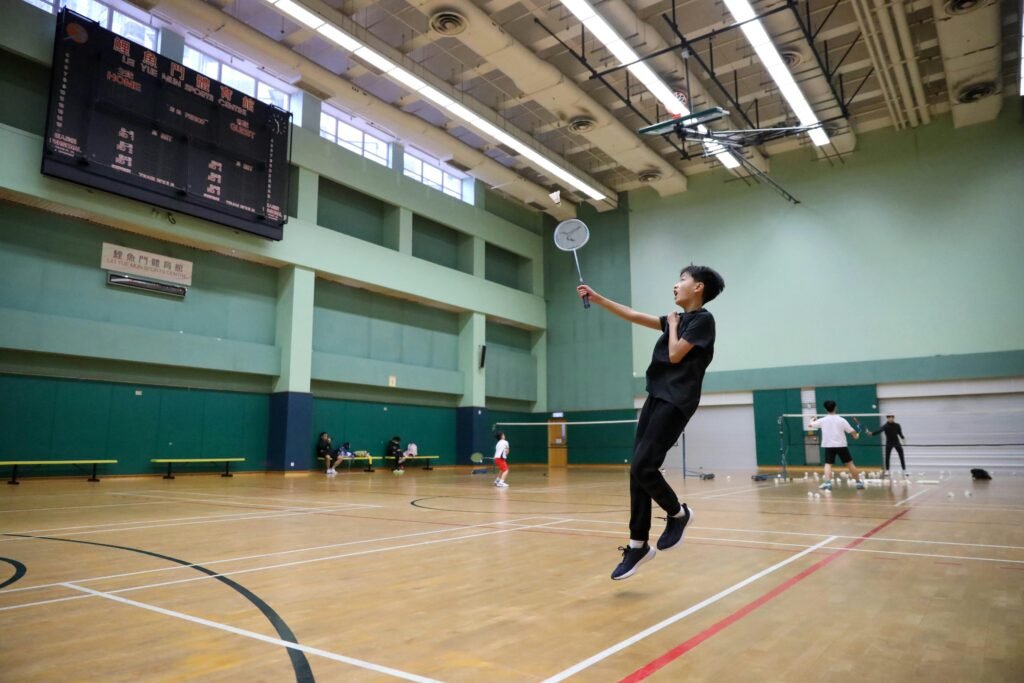
Badminton court construction is an important process for anyone who wants to build a safe, durable, and professional playing area. A well-built court improves player performance and reduces the risk of injuries. Whether you are planning a court for a school, academy, club, or personal use, proper planning is the key to success.
In this guide, we will explain everything about badminton court construction, including court size, flooring types, materials, lighting, costs, and maintenance. This article is written in simple language so anyone can understand it easily.
What Is Badminton Court Construction?
Badminton court construction means designing and building a court according to official badminton standards. It includes preparing the base, installing flooring, marking lines, setting up lighting, and adding accessories like nets and poles.
A good badminton court must provide proper grip, shock absorption, and clear visibility. These features help players move freely and play safely. Poor construction can lead to slippery surfaces and frequent injuries.
Badminton courts can be indoor or outdoor. Indoor courts are more common because badminton is sensitive to wind and weather conditions.
Standard Badminton Court Size and Layout
Before starting badminton court construction, it is important to know the standard court dimensions.
A standard badminton court size is:
- Length: 13.4 meters (44 feet)
- Width (Doubles): 6.1 meters (20 feet)
- Width (Singles): 5.18 meters (17 feet)
The court is divided by a net placed at the center. The net height is:
- 1.55 meters at the posts
- 1.524 meters at the center
Clear space around the court is also necessary. At least 1.5 meters of free space should be available on all sides for safe movement.
Indoor vs Outdoor Badminton Court Construction
Indoor Badminton Court Construction
Indoor courts are the best choice for professional and regular play. They protect players from wind, rain, and sunlight. Indoor courts also allow proper lighting control.
Most professional tournaments and training centers use indoor badminton courts. Wooden or synthetic flooring is commonly used for indoor courts.
Outdoor Badminton Court Construction
Outdoor courts are usually built in parks, schools, or homes. These courts are cheaper but less reliable because wind affects shuttle movement.
Concrete flooring with anti-slip coating is commonly used for outdoor courts. However, outdoor courts are not recommended for competitive play.
Flooring Types Used in Badminton Court Construction
Flooring is the most important part of badminton court construction. The right flooring improves comfort, safety, and performance.
Wooden Flooring
Wooden flooring, especially maple wood, is widely used in professional indoor courts. It offers excellent shock absorption and grip.
This flooring is expensive and requires regular maintenance. It is mostly used in international-level stadiums.
PVC Synthetic Flooring
PVC badminton flooring is very popular today. It is affordable, durable, and easy to install. It provides good grip and reduces stress on joints.
Most schools, academies, and clubs prefer PVC flooring for badminton court construction.
Concrete Flooring
Concrete is mainly used for outdoor courts. It is strong and long-lasting but hard on joints.
Anti-slip coatings are added to improve safety. This flooring is not suitable for professional indoor play.
Badminton Court Base Construction Process
The base is the foundation of the court. A strong base ensures a long-lasting court.
First, the ground is leveled properly. Any uneven surface is removed to avoid cracks and water issues.
Next, a concrete or cement base is laid. This base must be smooth and flat. After curing, the final flooring material is installed on top.
Proper drainage is also important, especially for outdoor badminton court construction.
Lighting Requirements for Badminton Courts
Good lighting is essential in badminton court construction. Poor lighting can affect player vision and performance.
Indoor courts usually use LED lights. These lights provide bright, uniform illumination and save energy.
Lights should be placed high enough to avoid glare. Shadows on the court must be minimized for clear shuttle visibility.
Outdoor courts require weather-resistant lighting fixtures.
Line Marking and Court Accessories
Court marking is done after flooring installation. Lines are usually white or yellow and should be clearly visible.
The lines must follow official badminton rules for singles and doubles courts.
Other accessories include:
- Badminton net
- Net poles
- Umpire chair (for tournaments)
- Player seating area
All accessories should be securely installed for safety.
Cost of Badminton Court Construction
The cost of badminton court construction depends on several factors:
- Indoor or outdoor court
- Type of flooring
- Size of the court
- Lighting system
- Location and labor cost
On average:
- Outdoor court: Low cost, basic construction
- Indoor PVC court: Medium cost
- Indoor wooden court: High cost
PVC courts offer the best balance between quality and budget.
Maintenance Tips for Badminton Courts
Proper maintenance increases the life of the court.
Clean the floor regularly to remove dust and sweat. Avoid using harsh chemicals on synthetic flooring.
Check lighting, net tension, and surface grip from time to time. Repair small damages early to avoid bigger problems.
Indoor courts should have controlled temperature and humidity for best performance.
Common Mistakes to Avoid in Badminton Court Construction
Many people make mistakes during badminton court construction that reduce court quality.
Avoid uneven flooring, poor lighting, and incorrect dimensions. Do not use slippery materials that can cause injuries.
Always follow official standards and hire experienced professionals for construction work.
Final Thoughts
Badminton court construction requires careful planning, quality materials, and proper execution. A well-constructed court improves player safety, comfort, and overall playing experience.
Whether you are building a court for personal use or professional play, choosing the right flooring, lighting, and layout is essential. Indoor PVC courts are the most popular choice today due to their affordability and performance.